difference between froth and foam
drinking, FAQs, frothing, milk frothers

Difference Between Froth and Foam in Coffee: A Detailed Guide

It's tasty, it's fluffy, it's creamy. It gets on your mouth when you take a sip. Of course, we are talking about coffee foam and froth! If you're a real fan of coffee, you may have come across frothy art or syrup-topped foamy beverages at your favorite coffee shop. 

What's the difference between froth and foam in coffee?

Foam and froth are the two components within some of the most popular coffee beverages, but are they the same?

Is froth the same thing as foam in coffee drinks? The most straightforward answer is, "No," at least not entirely. 

Our mission is to discover what foam and froth are, compare the two, and see what their similarities and differences are. We'll start with the basics.

What is the Difference Between Froth and Foam in Coffee?

Before we go deeper into the difference between froth and foam, let's get a high-level overview of both.

Coffee froth and foam are both created when air is incorporated into a liquid. The most common liquid for both is milk or cream. However, coffee itself also creates a crema when brewed. It is a functional part of coffee froth and is essential for creating froth art.

Coffee Froth

Coffee froth is created by heating milk and then aerating it with a steam wand, usually attached to an espresso machine.

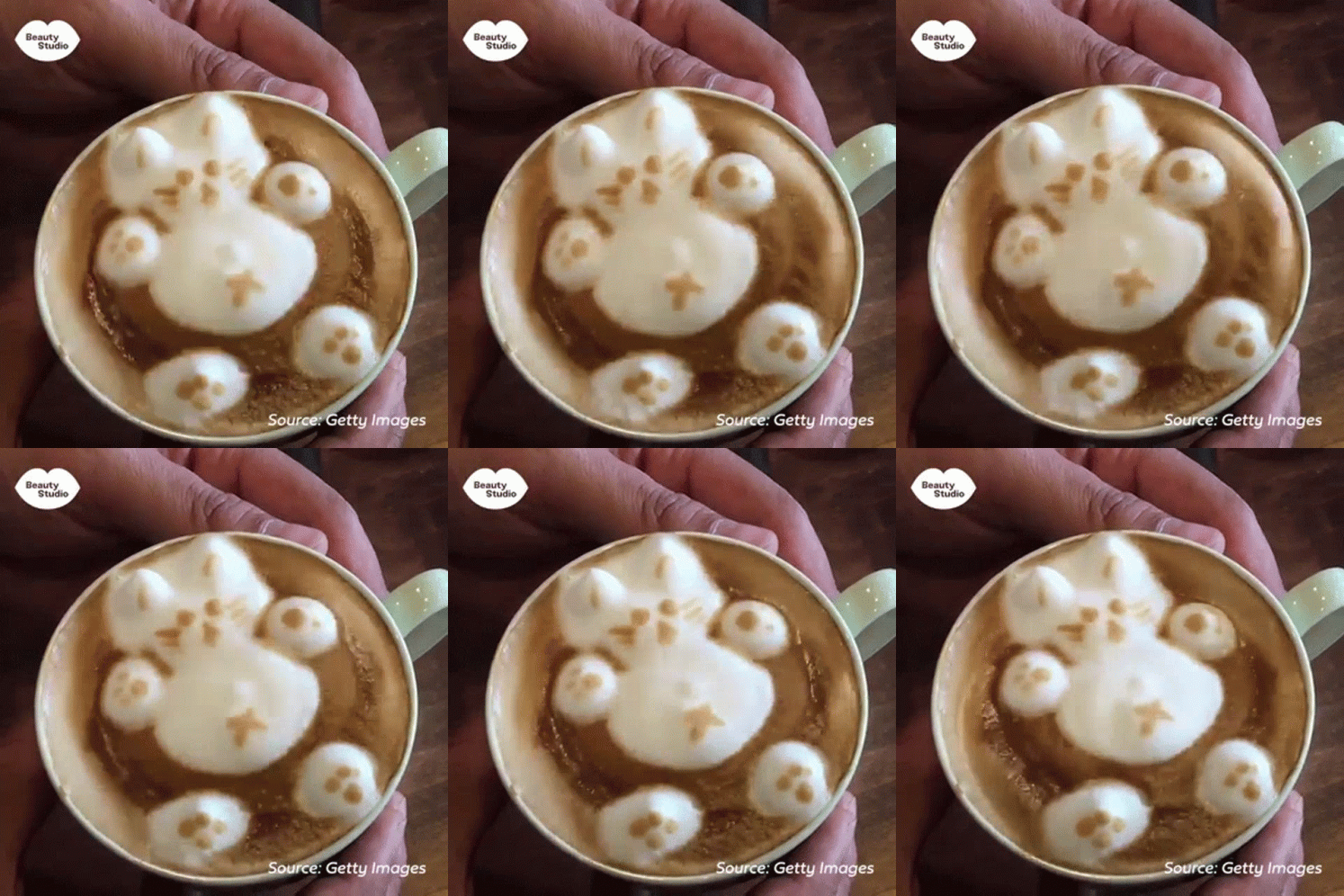
froth coffee art

This aerating wand is responsible for the whooshing sound you occasionally hear behind the counter, but aside from contributing to the coffee shop atmosphere, it is also responsible for creating extremely small bubbles that give the milk a creamy, gooey, or velvety texture. It has a "wet" sheen to it resembling melted marshmallows.

Frothed milk is also known as "microfoam" and is often used as a topping for hot coffee drinks like cappuccinos and lattes.

Coffee Foam

Coffee foam, on the other hand, is created by whisking air into the liquid, usually with a handheld frother or electric mixer.

You may also see coffee shops dispensing foam from nitro canisters.

Vanilla Sweet Cream Cold Brew

This foam is typically lighter and airier than froth, producing larger bubbles that don't hold their shape as well. For this reason, coffee foam produced this way is also known as "macrofoam" to reflect the larger bubbles it create.

Due to how quickly this foam dissipates,  you'll find it topping cold coffee drinks like iced lattes and cold brew more than hot beverages.

To quickly reiterate, the main difference between froth and foam in coffee is the way they are created and the texture of the resulting product. Froth (microfoam) works better for hot beverages, and foam (macrofoam) works better for cold brews.

Now that we have a distinct difference between the two, let's discover more about coffee forth and foam.


The Coffee Froth Phenomenon

Froth in coffee is a unique phenomenon that combines an espresso's natural crema with a heated milk froth mixture on its surface.

You may have seen one of these sporting different designs on the internet.


Some coffee shops create these intricate, but always impressive designs as a way to delight their customers, but it requires a chemical process to serve as a pillow for this art to work.

The Coffee Froth Phenomenon
8 Best Automatic Espresso Machines 2022

The natural frothy layer that forms at the top of your espresso and instant coffee beverages is known as crema.

Carbon dioxide produced during roasting is responsible for creating crema in espresso.

coffee stains

Protein-like fractions and polysaccharides derived from roasted coffee, respectively, increase foamability and foam stability.

Coffee Froth Art

Crema with a unified texture keeps the volatile aromatic compounds in the espresso and prevents it from cooling too quickly.

It tastes quite like a frothing cappuccino.

The molecules contained in steamed milk attach to the crema. This phenomenon allows a talented barista to create artwork using the crema layer as a canvas and the milk froth as the paint. 

Some creative baristas often combine the two types of foam when creating 3D art on your coffee beverages.


The milk froth can hold other fluids, yet remain elastic enough to be manipulated using various froth art techniques.

coffee stains

FAQs

What is coffee froth?

Coffee froth is the white fluffy layer in hot coffee beverages created from combining aerated steamed milk with a coffee's natural crema.

Are coffee froth and foam the same?

There is a slight difference between froth and foam in that froth is created with an aerating wand from heated milk or cream, while foam is whisked or dispensed from a pressurized canister.

Is frothing milk the same as cold foam?

No. Frothing milk only works with hot beverages. Cold foam, while using similar ingredients, would break down too quickly in hot beverages, since the foam bubble sizes are much larger than aerated froth bubbles.

Does a frother make foam?

Yes, a frother can make foam  as long as the cream, milk, or milk alternative is cold.

What is foam called in cappuccino?

Depending on the type of cappuccino, the foam can either be a froth (microfoam) for a "wet" cappuccino, or a foam (macrofoam) for a dry cappuccino.

What is the difference between milk froth and foam?

Frothed milk (microfoam) has a stronger structure than foam, which spreads quickly  when exposed to hot beverages.

Is frothed milk the same as milk foam?

No, frothed milk is not the same as milk foam. Frothed milk holds it's shape better when exposed to hot liquids than foam, which is why foam is used more in cold beverages.


FINAL THOUGHTS

So now we know the difference between froth and foam in coffee. We know that froth is created using an aerating wand to steam heated milk or cream, and that it mixes well into the natural crema of espresso drinks. Froth is used for creating 2D latte art and to serve as an additional layer for preparing 3D art combined with cold foam. We also learned that foam can also top hot beverages, but its structure works best with cold beverages. Foam takes up more 3D space, but melts away easily.

Read More
5 Best Kona coffee brands
coffee sourcing, beans, best of, reviews

The Top 5 Best Kona coffee brands: Who made the cut?

Our Top Picks

Private Reserve Medium Roast 100% Kona Coffee

Hawaii Coffee Company-Royal 100% Kona Coffee Private Reserve

Best Quality


Blue Horse 100% Kona Coffee Medium Roast

Best Value


Hawaiian Kona Extra Fancy Coffee

Volcanica Hawaiian Kona Coffee Medium Roast

Highest Grade


Imagine 100% Kona Coffee Medium-Dark Roast

Best for Cold Brew


Grande Domaine Vienna Roast Ground 100% Kona Coffee

Hawaii Coffee Company-Royal 100% Kona Coffee Private Reserve

Editor's Choice

Jump to the Reviews

Curious about the best Kona coffee brands? Look no further. We've emptied our pockets and come together with 5 brands you can trust are authentic. But before we get into that, let's talk a little about what makes Kona special.

Nestled in the beautiful big island of Hawaii is the heart of paradise: the Kona district. In the north and south districts of Kona lie the Hualalai and Mauna Loa volcanoes.

They're two of the most active volcanoes around the globe.

The entire area is called the "Kona Coffee Belt," which averages 500-3200 feet above sea level. And that's where all the magic happens.

Kona coffees are a world favorite and are known as the best Hawaiian coffee beans. This premium coffee is grown within that volcanic soil.

The natural minerals of Hawaii slowly nurture Kona coffees. The luxurious gourmet coffee is hard to come by.

It's only grown in Kona and is cultivated and roasted in small batches. Coffee lovers adore Kona coffee because of its rich flavor and guaranteed smoothness.

Did You Know? Kona coffee farms produce about 27 million pounds of quality Kona coffee per year.

 Yet, there's somehow more than 20 million pounds of "Kona coffee" sold at retail stores every year. How is that possible?

Let's dive into the Kona coffee bean's captivating story and the central issue threatening the famous Hawaiian coffee.

After learning the backstory to Kona, you can check out my coffee review and top 5 list of the best Kona coffee brands.

History of Kona Coffee

Reverend Samuel Ruggles was an American missionary and one of the first to come to Hawaii. In 1828, rumors state that Ruggles was responsible for introducing the coffee plant to the Kona district.

He had brought over the tree from coffee remnants in Brazil. Later in the 19th century, an English wholesaler named Henry Nicholas Greenwell made Kona coffee a well-known brand coffee names.

On the big island, his former store, the Greenwell store, and the Kona Coffee Living History farms have been converted into museums.

Following the decline of the world coffee market in 1899, owners of the more massive plantations in Kona had to rent out their crops to their employees.


The majority of the employees were Japanese workers. They had already been brought over to Hawaii to work on the sugar cane crops.


Because of their experience on the plantations, they were able to produce the highest-quality Kona coffee.

Today, the family-run Hawaiian coffee farms are the norm for cultivating pure Kona coffee.


About 800 Kona coffee farms exist, and each farm is a maximum average size of 5 acres. In 1997 the total average size of the Kona coffee area was about 2,290 acres!

kona coffee history

Growing coffee in Kona isn't without its problems, though. In the 90s, the Kona coffee trees were devastated by a parasite called the root-knot nematode.

In 2001, coffee experts found that a coffee species from Africa was resistant to nematodes: Coffee Liberica or Liberian coffee. 

They discovered that if they transplanted the Liberica species to any Arabica species, the resulting high-quality plant would be resistant to the parasite.

Growth and Processing of Kona

Growing and processing the best Kona coffee is an art-form that requires a ton of patience. The coffee plants in Kona begin to flower in February and March.


The tiny white flowers that develop all over the coffee trees are named "Kona Snow." By the end of August, the coffee cherry fruit begins to mature.


The Kona coffee beans are then ready to be hand-picked from August until January. The coffee plants can produce about 15 pounds of cherries each.


Fifteen pounds of cherries translates to about 2 pounds of roasted coffee beans. I'll go through more of the growing conditions for Kona beans later on in the article.

The best coffee beans undergo the wet processing method.

 You can learn all about the different ways of coffee bean processing here.

 But briefly, the wet process differs from the dry process by a rinsing step.

Growing_Kona_Coffee

Once picked, a "depulper" removes the pulp or the first layer of Kona beans. This depulping must occur within 24 hours of picking the bean.

After workers separate the pulp from the beans, they place the beans in a fermentation tank.

Note: At low elevations, they're kept there for 12 hours and at higher elevations for 24 hours. Here's where they develop their sweet flavor.

 The coffee beans are then rinsed and placed to dry on a drying rack outside. To be thoroughly dried, it takes 1 to 2 weeks.

Suppose the coffee beans are not dried adequately. In that case, they run the risk of developing a toxic by-product called a mycotoxin. 

Did You Know? Mycotoxins can cause disease and death in humans.

Before the green Kona beans undergo roasting, workers grind off the bean's last layer called the parchment layer. And voilà, the best Kona coffee beans are ready to go!

Grading of Pure Kona Coffee Beans

The type of seed classifies all coffee beans. Type 1 coffee seeds contain two beans per coffee cherry and are the most common coffee beans. The beans are oval on one side and flat on the other side.

grades of kona coffee beans

Type 2 coffee seeds contain only one bean per cherry. These coffee beans are round and are the rarest type called Peaberry coffee beans.

The Hawaii Department of Agriculture established a grading system for Kona coffee beans grown in Hawaii.

They're responsible for regulating these standards. For real Kona coffee, the types of coffee beans fall into categorized grades.

The categories filter based on size, moisture content, and defects. Out of the type 1 coffee seeds, the best Kona coffee has the extra fancy grade.

But, Kona Pea berry coffee rates even higher than the type 1 grades because it's so rare.

Type 1 Kona Coffee Grades

  • Kona Extra Fancy
  • Kona Fancy
  • Kona Number 1
  • Kona Select
  • Kona Prime

Type 2 Kona Pea berry Coffee Grades

  • Kona Pea berry Number 1
  • Kona Pea berry Prime

Another lower Kona coffee bean grade exists called "Number 3". Beans that fall into this category do not qualify to claim Kona status.

Any coffee beans below this class can only be labeled as "Generic coffee" and are "Off grade."

Finally, "Estate" is an unofficial classification that Kona coffee farmers use. It means that workers combine all the Kona coffee beans of various grades from a single estate.

Kona estate coffee does not include Number 3 or Off grade coffee beans.

Hawaiian Coffee-Kona Blends

To bypass the cost of producing and processing Kona coffee beans, companies are selling what they call "Kona Blends." Beware because Kona blends are not 100% Kona coffee beans.

These blends consist of only a small percentage of Kona coffee beans combined with other types of coffee beans.

The other beans can be Columbian, Brazilian, African, etc. To label coffee beans as a "Kona blend," the bag's contents must be up to 10% of Kona coffee.

Just stating the obvious, 90% of Kona coffee blends are from cheaper coffee brands.

Currently, state law in Hawaii orders that Kona coffee blend labels must indicate Kona coffee's percentage content.

Unfortunately, no other information is required. This law does not apply to the rest of the United States.

Companies have taken advantage of the prestigious Kona coffee name and use terms like "Kona style" or "Kona Roast" to describe their coffee.

In the year 2000, the Department of Agriculture of Hawaii patented "100% Kona coffee" with the U.S. Patent and Trademark Office.

If the Kona beans are indeed 100% Kona coffee, it needs proper labeling to indicate that standard.

What does Kona coffee beans taste like?

Kona coffee lovers agree that the taste makes Kona the best Hawaiian coffee. 

Traditionally, Kona coffee beans have a unique flavor and aroma.

It's creamy and medium-bodied, has low acidity and a spicy or winy taste.

taste of kona coffee

There's also sugary and syrupy notes like brown sugar, honey, and chocolate. It's bright, fruity, crisp, and straightforward. And because it has low acidity, it's easier on the stomach.

Why is Kona coffee the best?

In my opinion, Kona coffee is the best because of the extra care put into each step along the whole way of processing. Because of this, Kona coffee beans have excellent flavor.

The Kona region has an ideal climate for coffee growth. As mentioned earlier, the Kona beans are grown in the volcanic areas in Hualapai and Mauna Loa in the Kona district. 

The beans are grown in rich volcanic soil, which provides the perfect fertile environment.

Hawaii has a tropical climate with plenty of sunshine and humidity.

why kona coffee is best

 In the mountainous regions, there is some warm rain and fog. It doesn't get cold enough in the mountains to create frost. For these reasons, Hawaii is perfect for growing the best coffee beans.

Kona coffee is grown in the shade, which increases its flavor profile. The longer ripening time enhances their medium-bodied taste and the number of flavor notes.

Using the wet method, the beans are meticulously hand-picked, processed, and sorted manually. Eventually, they dry in the sun. These steps increase the Kona beans' aroma.

Where can I buy real Kona coffee?

In 2019, farmers filed a class-action lawsuit against some mass retailers in the United States. They claim that individual companies have fraudulently mislabeled the origin of their Hawaiian "Kona" coffee.

There are 19 Kona-type brands from retailers, including Walmart, Costco, Amazon, Safeway, and Kroger.

With that said, to buy Kona coffee, you can search online, visit some gourmet coffee shops, or perhaps some farmer's markets.

The thing to keep in mind is that the label must say 100% Kona coffee. Another tip is to ensure that it says where the coffee beans originate.

It needs to be in the Kona district, and the label must also mention that the beans are from Hawaii. If it doesn't, it's probably a fake blend.

Note: The Price of Kona coffee ranges from about 28$-65$ USD per pound. If the coffee beans' Price is much lower than this range, it could be a blend.

Lastly, check that the bag received a grade from the Hawaii Department of Agriculture.

These suggestions should guarantee you are buying the best genuine Kona. If it's too good to be true, it probably is.

Is Kona coffee, delicious?

Recently, a friend brought me a bag of real Kona coffee from Hawaii. It was probably the best cup of coffee I had in years. I do recall seeing the label of 100% Kona on the bag. The most memorable part of that experience was the taste.

 It was medium-bodied but not overpowering and relatively smooth. But don't just take my word for it; check out Kona coffee reviews online.

Enthusiasts recognize Kona coffee as some of the best coffee in the world.

delicious kona coffee

 I found that most Kona brands are award-winning. Why? The coffee climate is grown, processing, and the family-operated farms in Kona contribute to these high-quality Arabica coffee beans.

Although Kona's Price per pound is costly than others, it's worth trying if you're a coffee drinker.

I think the fact that it comes from a single origin makes it a rare commodity. And to me, that makes it unique.

What is the best 100% Kona coffee?

Without further ado, let's jump into the five best Kona coffee brands and my top pick. I've compiled the list based on the Kona brands most talked about online, Kona coffee grades, customer reviews, and Price.

1. Hawaii Coffee Company-Royal 100% Kona Coffee Private Reserve

Pros

  • 100% Kona
  • Judged as "Superior"
  • Whole Bean

Cons

  • Price
  • Mild Flavor

The Royal Kona Coffee Company (est. 1969) is a sister company to the Hawaii Coffee Company. Rest assured, this is genuine, Kona.

It comes from the Kona region, in the Captain Cook area of the big island, and is their most popular Kona coffee brand.

Its flavor profile is a full-bodied, smooth, medium roasted coffee with a pleasant aroma and fruity taste. Coffee makers like drip coffee makers or a French press work well for medium roast coffees like this one.

The American Academy of Taste judged this particular coffee Kona brand to be "superior."

According to the coffee company Royal Kona, the "private reserve coffee," meaning is different from "single estate coffee." Single estate coffee comes from a single farm, while Kona private reserve comes from multiple farms.

Although its 100% Kona, the Hawaii Coffee Company, Royal Kona website doesn't state which Kona grade this coffee has.

I assume like an estate Kona coffee, it's a combination of different Kona-graded beans. They also only sell the whole bean coffee in a 7oz bag or a 2lb bag.


2. Blue Horse 100% Kona Coffee Medium Roast

Pros

  • 100% Kona
  • Price
  • Fair Trade
  • Sustainable Farming Practice
  • Whole Bean

Cons

  • Kona grading not available

The Blue Horse Kona coffee company has been producing coffee beans for years and years.

They operate on a small family estate in the Kona region, priding themselves on selling only authentic Kona coffee.

They don't manufacture any Kona blends like other companies. They're known for growing shade-grown coffee beans, so it's a low acid coffee with some sweetness.

They don't use any fertilizers or pesticides. Blue Horse Kona coffee is a medium roast, smooth, rich coffee with a spicy flavor aftertaste.

Since this brand is another medium roast, it's best to use a French press or drip coffee maker.

Again, because this coffee is an estate Kona coffee, different Kona coffee beans' grades are in the bag. Still, they're all sourced from a single estate.


3. Volcanica Hawaiian Kona Coffee Medium Roast

Pros

  • 100% Kona
  • Extra Fancy Grade
  • Fair Trade
  • Rainforest Alliance Certified
  • Whole Bean
  • Organic

Cons

  • Price

The Volcanica coffee company is the first on our list that produces various coffee beans from different countries. But, they grow their coffee in volcanic areas around the world like in Kona.

Volcanica Kona coffee is a medium roast and full-bodied coffee that is shade-grown. The flavor profile is rich and whiny with floral notes and a citrus/caramel undertone.

Because it's a medium roast Kona coffee, a French press or drip coffee maker would be appropriate.

This volcanic coffee brand has the Kona extra fancy grade, which is the highest Kona coffee grade standard.


4. Imagine 100% Kona Coffee Medium-Dark Roast

Pros

  • 100% Kona
  • Award Winning
  • Fair Trade
  • Price
  • Whole Bean
  • Sustainable Farming Practice

Cons

  • Bitter flavor with Hot Brew

The Imagine Kona Coffee beans brand belongs to Buddha's Kona Coffee and Tea Farm company, located in the Kona area.

Many of their products are award-winning, with The Imagine coffee brand, in particular, winning the AVPA gold medal.

It's a medium-dark roast rich in taste with caramel, crème brulée, and nutty flavor profile. Since this medium-dark roast is similar to an espresso bean, you can use espresso machines or a French press. You can also use the cold brew method.

The Imagine Kona Coffee beans is a single estate coffee. But it has the Kona extra fancy grade and is cheaper per pound than Volcanica Kona.


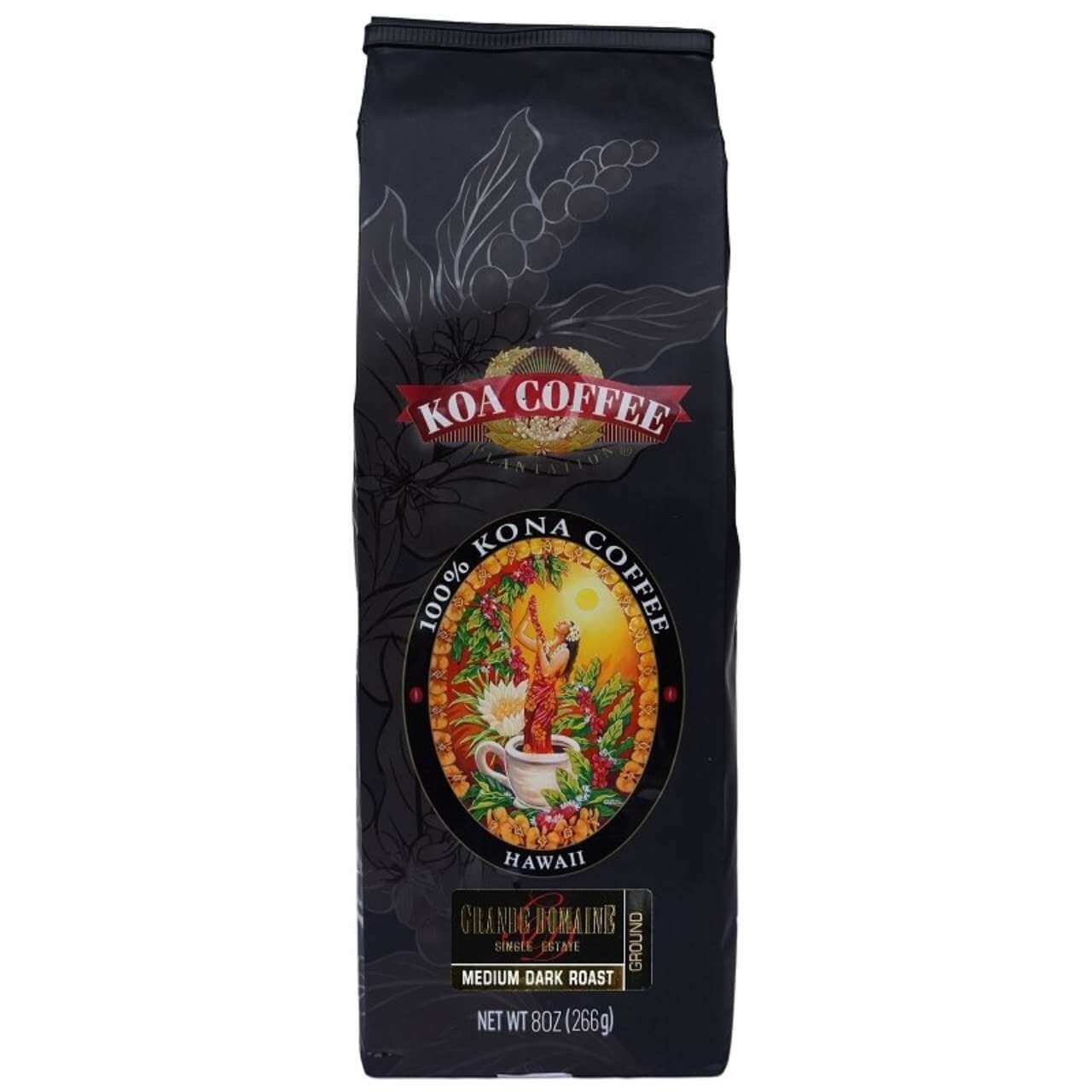
5. Koa Grande Domaine Vienna Roast Kona Coffee

Pros

  • 100% Kona
  • Low Acid
  • Fair Trade
  • Chemical Free
  • Whole Bean

Cons

  • Price

The Koa coffee company produces genuine 100% Kona. They've won many awards, including the PCCA coffee of the year and Gevalia cupping competition.

You'll find Koa coffee featured in Forbes as one of the "top 10 coffees of the world" and one of "50 America's best coffees in America".

They don't sell any Kona blends. The Koa Coffee Grand Domaine brand won the Kona Coffee cupping contest with their Vienna roast, a medium-dark roast Kona coffee.

It has very little bitterness and is creamy, smooth, and balanced. This Koa coffee has caramel and chocolatey flavor.

I recommend using an espresso machine or a French press for this Koa coffee because of the darker finish on these beans. Still, it is ideal as a cold brew coffee candidate.

Koa coffee beans are a unique mixture with Pea berry Kona coffee. Since Pea berry Kona coffee is the "champagne of Kona coffee," it has an even higher grade than the extra fancy Kona because it's a unique mutation.

You can expect great-tasting coffee from this pair. You can find it available in the whole bean for an affordable price on their website.


FINAL THOUGHTS

If you're a coffee drinker, I strongly urge you to try Kona coffee from the big island. As far as the best coffee brands go, Hawaiian Kona coffee brands are of the highest-quality beans.

And it's a single-origin coffee, so you know it's pure. Single-origin coffees are great for cold brew too! I know it may be on the pricier side. Still, hopefully, my coffee review has given you some excellent, affordable options.

The taste of Kona coffee is undoubtedly worth it. It's just too good of a cup to pass up.

Read More
The Best Instant Coffee Brands to Try in a Cold Brew Pinch
beans, coffee sourcing, Learn

The 7 Best Instant Coffee Brands to Try in a Cold Brew Pinch

Our Top Picks

Trader Joe's Instant Cold Brew Coffee

Most Convenient 


Civilized Coffee Co. Instant Cold Brew Coffee 

Most Cost-Efficient


Cusa Coffee Cold Brew Instant Coffee

Most Flavor Options


Saturnbird Instant Cold Brew Coffee

Best Flavor

Jump to the Reviews

When you need coffee in a hurry, you can't always wait for cold brew. If you're looking for the best tasting instant coffee producers to try in a pinch, check out our list.

We've scoured the instant coffee market and tried many instant coffees. Before we get started with our review, let's get one thing straight.

For most people, instant coffee tastes inferior to freshly ground.

Despite what you may think about instant coffee beforehand, we ask that you put aside your critical factor, and give instants another look.

With that in mind, we've decided on the best high quality instant coffee options on the market today, so you can get your caffeine fix in a pinch. The best part is, these don't require hot water.

As a long-time coffee enthusiast/guinea pig for all things coffee-related, I have an extensive personal experience with instant coffee. I have tried and tested a wide variety of instant coffee options for my own purposes, and have developed a keen palate for identifying the nuances of flavor that help define "quality" in this type of coffee.

I can confidently say that the taste and quality of instant coffee products has greatly improved in recent years, to the point where choosing an instant coffee for cold brew could be a working solution in a pinch. That being said, don't torch me if you dislike any of the instant coffees we've put in our list.

What Defines "Quality" in Instant Coffees?

When defining quality for instant coffee, the key decision-making factors for many consumers is primarily the taste and aroma of the product, but the bean variety, processing method, ingredients, and packaging also play a role.

Packaging

Individually packaged, single serve packets are by far the most common and travel-friendly solutions, but you will also find instant coffee in jars.

Choosing an instant coffee based on the packaging may be a bit nit-picky, but if you are environmentally conscious, you really need to consider the carbon footprint that disposable packaging has on the Earth. 

However, the downside of choosing bulk instants is the inevitable consequence of coffee going stale. As you open and close the jar, moisture from the air will get into the jar and slowly rehydrate the freeze-dried powder. As a result, your instant coffee flavor will degrade over time.

Emptying your jar into a vacuum-sealed container will prevent this from happening and lower your carbon footprint.

Processing Method

There are a few ways instant coffee is processed, which we will get into more later, but there are also brands which finely tune their processing for the purposes of recreating your cold brewed coffee flavor, if that is what you are after.

Ingredients

Not all instant coffees are created equal, and some may contain artificial flavors or even unwanted preservatives. While you might want some of the additives if they enhance the flavor or mouthfeel. However, it's worth checking the ingredients list and looking for instant coffees that are made with natural ingredients as much as possible and to avoid those with ingredients you cannot pronounce or do not know the purpose of its inclusion.

Convenience

This may come as no surprise, but while instant coffee is known for its convenience, it can often be difficult to find a high-quality option that truly delivers on these factors when compared with traditional coffee roasting.

Bean Variety

One of the key underlying factors in determining the quality of instant coffee is the type of beans chosen for the product. In our collective opinion, the best instant coffee producers use high-quality, specialty-grade arabica beans that are carefully sourced from top coffee-growing regions around the world. Otherwise, fine robusta beans make a decent blend with arabica. Regardless of which, these premium beans are often hand-picked, sun-dried, and carefully processed to ensure optimal flavor and aroma.

Taste & Aroma

There are a number of instant coffee brands that stand out in terms of taste and aroma. To determine the best instant coffee options on the market, we conducted a blind taste test of several leading brands.

We evaluated each coffee based on the factors we mentioned above. Our findings reveal a number of instant coffee options that truly deliver on flavor, and stand out from the competition when compared.

What is Instant Coffee?

Instant coffee is a type of coffee made from coffee beans that have been roasted and ground, then brewed and freeze-dried. Instant coffee is convenient because it can be made quickly and easily with just hot water. It's also easy to transport and doesn't require any special equipment.

It's perfect for busy mornings, travel, and outdoor activities where you need an instant pick-me-up.

 When choosing an instant coffee, it's important to find one that you personally enjoy the taste of.

Instant coffees can vary widely in terms of quality and flavor, so it's worth trying a few different brands to see what you like best.

Instant Coffee

Traditional instants like Starbucks VIA, Nescafe Taster's Choice, and WAKA are excellent choices that I highly recommend if the cold brew options below don't quite meet your needs.

As a part of our research, we've sifted through the chaff and compiled a list of 8 great instant coffees we think you might like, and answer a few questions you may have along the way.

What are the Benefits of Instant Coffee?

One of the main benefits for choosing instant coffee is its convenience. It can be brewed anywhere there is a container and water.

This makes it a popular choice for people who want a quick and easy cup of coffee on the go, or to bring with for camping, hiking, or for other outdoor activities where boiling water might not be feasible.

Couple enjoying coffee by a camp fire

Another benefit of instant coffee is the wide variety of flavors and blends available on the market today.

We will cover some cold brew coffee options below that go further than the traditionally mocked instant coffee taste, to provide more in your morning cup, most closely resembling a cold brew that took hours to make.

However, there are also some drawbacks to instant coffee which make it less desirable than your freshly brewed cup. 

The taste and quality can vary widely depending on the brand and type of instant coffee you choose.

Additionally, some instant coffee producers use lower quality beans or artificial flavors and additives to cut costs, which negatively impact the taste of the final product. Quality instant coffee stems from how it's manufactured.

How is Instant Coffee Made?

There are a couple different ways that instant coffee can be made. The most common method is to roast and grind real coffee beans, then brew them and freeze-dry the resulting liquid. Instant coffee can also be made by extracting the flavor from roasted coffee beans using water, then spray-drying the mixture into a powder.

Freeze Dried Production Method

Traditionally, the highest-quality instant coffee comes from producers using a freeze-drying method, which preserves the coffee's natural attributes, such as aroma and flavor.

In my experience, some of the best instant coffee options on the market are made using the freeze-drying method. The freezing process also eliminates the need for any preservatives, which can negatively impact the coffee's authentic taste.

However, you will learn that with advances in technology, there are now more ways to produce high quality instant coffee. 

A Brief History of Instant Coffee

Instant coffee was invented in 1901 by Japanese chemist Satori Kato. He was trying to find a way to make coffee that was easier to transport and store.

After years of trial and error, he finally perfected his instant coffee recipe.

Since then, instant coffee has become a popular choice for people who want a quick and easy cup of coffee. It's also a popular choice for camping, hiking, and other outdoor activities where boiling water might not be an option.

Historically, instant coffee has been viewed as a sub-tier alternative to freshly brewed coffee, but as you will continue to learn in this post, with recent advances in technology, the quality of instant coffees has improved greatly.

Today, there are many different brands and varieties of instant coffee available on the market.

And with advances in technology, the quality of instant coffees has improved greatly over the years.

history of instant coffee

What are Spray-Dried vs Freeze Dried Instant Coffees?

In my experience, the best traditional instant coffee products on the market today are those that are made from high-quality beans, a freeze-dried processing method, and proper packaging for airtight storage.

Still, spray-drying has it's benefits, especially when careful attention to made to ensure cold brew coffee crystals maintain their authentic flavors. Let's have a look at the differences of these preparation methods for more context.

Spray Drying Instant Coffee Crystals:

The traditional spray-drying method utilizes a special sprayer to spray condensed coffee concentrate into a cylinder. The cylinder is then heated to nearly 480°F, causing the liquid mist to evaporate, leaving behind powdered coffee particles.

However, brands like Cusa Tea use a botanical extraction method, a spray drying variation specifically designed for coffee, which gently dehydrates cold brew coffee to maximize flavor extraction without temperature shock. 

Freeze Drying Instant Coffee Crystals:

Freeze drying takes a bit longer to complete and is a little more complicated.

However, this method is generally preferred over spray drying since the coffee's natural attributes, such as aroma and coffee flavor, stick around after it becomes a powder.

Unlike with spray-drying, the coffee concentrate is placed within a freezing chamber instead of a heated cylinder, where temperatures are kept around -58°F.

The frozen coffee is separated into trays, broken up into coffee granules, and then transported into a sublimation chamber.

This chamber subjects the coffee to temperatures so drastic, that water solids instantly become a gas, without passing through the liquid phase.

The freeze drying instant coffee passes through low-pressure, heated vacuum tubes to remove the gases from the solids quickly, leaving freeze dried instant coffee with much of the same flavor and aroma as before.

Is Instant Coffee a Game Changer for Cold Brew?

Instant coffee could be a game-changer for cold brew as long as you first understand that not every instant coffee is considered equal

You may find companies claiming their new instant blend is great for cold brewing purposes only to realize that the final product tastes like poor quality iced coffee.

Instant coffee granules

Some marketing tactics may suggest that you are getting a cold brew product by adding cold or lukewarm water to their instant coffee powder, but was that coffee extract powder made from cold-brew or hot coffee?

Still, the magic is in brewing method.

As long as you choose cool water for cold-brewed instant coffee powder, then you may experience many similar benefits from traditional cold brews at a fraction of the prep time.

Since some brands have decided to cold brew their instant coffee, then use the freeze-drying process to create a powder out of the result, you may find these to be the best instant coffees when you add cool water.

If nothing else, these brands are certainly worth trying, as the flavor you are coming from the cold-brewed process.

That being said, you probably want to stick to a medium roast instant coffee or dark roasts.

You might not like how bitter an instant Italian roast is, even if it was initially cold-brewed.

Can You Make Tasty Cold Brew with Instant Coffees?

Yes you can, but don't make the mistake thinking every instant coffee will taste great as cold brew.

Note: Not every brand can produce instant coffee of significance.

While brewing iced coffee or cold brew with good instant coffee is possible, it may not taste as good as if you were to use traditional brewing methods.

Even if some brands choose to cold brew their organic instant coffee powder first, the processing it goes through may strip away some of the coffee's natural nuances in both flavor and aroma.

So, if you're looking for a quick and easy cup of coffee that tastes close to what you might expect from cold brew, you may be disappointed with the final product.

When does it Make Sense to Use Instant Coffee for Cold Brew?

There are a few situations where using a single serve instant coffee packet for cold brew might make sense:

If you're in a pinch and need a quick cup of coffee.

It's also a good choice for camping, hiking, or other outdoor activities where boiling water might not be an option.

If you are traveling to a place where cold brewing equipment is hard to come by.

You love trying new things but don't have much time on your hands.

What types of Beans are Most Commonly Used in Instant Coffee Brands?

There are two types of beans that are most commonly used in instant coffee brands:

  • Arabica
  • Robusta
A Look at the Burr grinder Cuisinart | 2022 Edition

Arabica coffee beans are known for their sweet, more vibrant flavor, while Robusta beans are known for their bold, more robust flavor.

The best instant coffee brands will use Arabica beans only, while others choose a blend of both lower quality Arabica and Robusta beans due to price or other restrictions.

Some brands feature premium "fine robusta" or hand-selected robusta beans which are of higher quality. Brands featuring fine robusta charge a premium, but the flavor and quality are of a higher tier.

3-in-1 Instant Coffee Packets

Historically, instant coffees relied on subpar arabica or robusta beans because they did not meet market standards.

3 in 1 instant coffee packs

Yet, instead of throwing them out, instant coffee has always been a better solution as part of a powder pack, sometimes referred to as 3-in-1 instant coffee.

3-in-1 instant coffee combines instant coffee powder, powdered creamer, and sugar.


The Top 4 Best Instant Coffee Brands for Instant Cold Brew in 2023

If you're looking for the best instant coffee brands to try a cold brew pinch, look no further than these four best options!

Why? Well, they were first made using a cold brewing method before the freeze-drying process.

1. Trader Joes Instant Cold Brew Coffee

Pros

  • Medium Roast - Less Bitter
  • Environmentally Friendly
  • Fair Trade
  • Price
  • Convenient to Buy In-store

Cons

  • May go Stale if not Vacuum-Sealed
  • Glass Jar may Break

One of the top contenders in our taste test was the instant coffee from Trader Joes, featuring a rich aroma and a smooth taste. I found that for an instant coffee developed for the cold brew crowd, that it was surprisingly well-balanced and not too bitter. 

Additionally, it had a pleasant mouthfeel, that made it easy to drink. Now, I've been drinking Trader Joe coffee for years, and love the convenience of getting some at the store. So, I was pleasantly surprised to see a cold brew option appear on the shelves that wasn't a pasteurized shelf-stable liquid. 

Trader Joes claims that their Instant Cold Brew Coffee is made from 100% Arabica beans and comes in a convenient pre-measured packet, making it easy to get the perfect cup of cold brew every time. Simply add water, stir, and enjoy!

Where this option truly shines is how it delivers on convenience. I'm so glad there is an option I can find in my local grocery store, but that is also available online for purchase.


2. Civilized Coffee Co. Instant Cold Brew Coffee 

Pros

  • Environmentally Friendly
  • Medium Roast - Less Bitter
  • Low Acidity
  • Non-GMO

Cons

  • Muted Flavor
  • May go Stale if not Vacuum-Sealed

Another standout brand in our taste test was Civilized Coffee Co. This instant coffee had an earthy, toasty aroma, and a chocolatey, caramel flavor that fills the mouth fully, and trails smooth.

I could see this particular product sitting on my shelf in a pinch, if I ran out of cold brew, time, or both. Civilized Coffee Co. Instant Cold Brew Coffee Granules are also made from 100% Non-GMO Kosher Arabica beans.

The coffee is spray-dried and extracted as cold brew first, but I did not notice anything amiss with the flavor. It comes in a jar, so you can make as much or as little cold brew as you like.

However, since it comes in a 5 or 10oz jar, you may want to pour it into a vacuum sealed container to keep it fresh longer, and to avoid it potentially going stale if you do not drink from it often.


3. Cusa Coffee Cold Brew Instant Coffee

Pros

  • No Artificial Additives
  • Very Convenient
  • Travel-Friendly
  • Roast Variety
  • Flavor Variety

Cons

  • Not Environmentally Friendly Packaging

For the sheer number of varieties to choose from Cusa Tea brand instant cold brew coffee really sets the bar high for flavor-enhanced instant cold brew packets. Cusa Tea's instant cold brew coffee is made with fair trade, organic Arabica beans and has a rich, smooth flavor that is perfect for cold brewing.

Their cold brew variety pack gives you plenty of options to choose from, so you are sure to find one you like from the bunch. It comes in a single-serve packet, so you can take it with you on the go.

What's more, even with the flavor enhancements, Cusa screens their products for mold, fungus, heavy metals, and pesticides. Finally, they use a patented slow dehydration process, which prevents bitterness, and muted flavors found in traditionally processed instant coffees.


4. Saturnbird Instant Coffee

Pros

  • Roast Variety
  • Price
  • Non-GMO
  • Chemical Free

Cons

  • Not Environmentally Friendly Packaging

Another brand with multiple flavor options is Saturnbird Instant Coffee. Their flavors range from light to dark roast, but we found their medium to darker roasts to meet our collective taste expectations more than the lighter roasts.

Still, their mix variety pack will give you several numbered options to try. Then, if you enjoy them as much as we do, you can buy them based on the number.

Personally, I prefer their medium dark roast(#4) for my instant cold brewed coffee over their lighter roasts. Their dark roasts are a bit too bitter for me without adding creamer. And if you know anything about me, I drink my cold brew black without sugar or cream.

Saturnbird Instant Cold Brew Coffee is made from 100% Arabica beans that have been slow-roasted for a smooth coffee flavor. They dissolve quickly in cold water, so you can enjoy your cold brew in just minutes.

The downside of this brand is their choice to use individual coffee cups, which seem to have no other use than to resemble a cup of coffee, yet seem to serve no other purpose than to dispense a single serving.

In China, where the brand originates, they have a recycle program which rewards consumers for returning the containers in exchange for prizes, while enticing them to make more purchases at these coffee shop partners. Yet, nothing like this exists in the USA, and the environmental waste without such a program is a bit disheartening. For this reason, they are last on our list of contenders.


The Best Instant Coffee Options Iced Coffee in 2023

Given the realm of cold brew instant coffees is fairly new, we thought we would include some of our favorite traditional instant coffees as well for you to sample. If you like the flavor of iced coffee and you want more variety give these other instant coffees a try.

Nescafe Taster's Choice House Blend Instant Coffee

Looking for a delicious and convenient way to enjoy iced coffee?

Taster's Choice House Blend Instant Coffee is the perfect solution! 

Made with 100% Arabica beans, this instant coffee is specially formulated for iced coffee. Just add water, stir, and enjoy!


Nescafe Clasico Instant Coffee

Nescafe Clasico Instant Coffee is another great option for iced coffee.

Plus, the single-serve packets make it easy to take on the go. 

This is not Nescafe Gold. Nescafe Gold instant espresso roast will always taste bitter in my opinion.


Starbucks VIA Instant Coffee

Starbucks VIA Instant Coffee is another great option for instant iced coffee.

Though some people do not like Starbucks coffee in general, at least they taste consistent.

Their instant coffee has that same rich flavor any coffee drinker comes to expect from the brand, yet packaged in single-serve packets. Starbucks VIA Instant comes in many roast options, but their sweetened iced coffee is pretty good if you like sweetened.


WAKA Coffee Instant Coffee

WAKA Coffee Instant Coffee makes a decent cup of iced coffee. There are so many flavor options to try and they are all really good. Don't sleep on this brand, as it is a crowd favorite around here.

You might also like instant coffee from Douwe Egberts Pure Gold or Mount Hagen Organic Instant Coffee.

Four Sigmatic Mushroom Coffee (added to cold brew), while not entirely coffee powder, is a great addition to your morning joe.


FAQ

What are some other uses for Freeze Dried Instant Coffee?

Use your instant coffee in recipes that call for coffee extracts, like Tiramisu, coffee cakes, and cocktails. A pinch of instant coffee powder can help enhance the flavor of soups, stews and other dishes.

Can I use ground coffee for instant coffee?

No, unless you freeze dry or spray-dry your already prepared coffee liquid, using ground coffee without a filter will result in a gritty, sediment-filled sludge that you will likely choke up while drinking. Don't do it.

Is there an instant coffee that tastes like real coffee?

Technically speaking, instant coffee is real coffee, but the flavors will rarely match the highest quality freshly brewed cups you already enjoy. Consider instant coffees for times where boiling water is not feasible, or when you are on the go without the time or patience to brew a cup beforehand.


FINAL THOUGHTS

Overall, I believe that instant coffee has come a long way in terms of taste and quality, especially for cold brew lovers.

I am confident that my personal experience with these instant cold brew coffee brands have enabled me to provide a detailed and accurate evaluation, highlighting each brand's strengths and weaknesses. My ultimate goal after all, has been helping you make an informed decision when choosing the best instant coffee brand for your cold brew needs.

With its convenience and wide variety of flavors, instant coffee is a great option for anyone looking for a quick and easy cup of coffee, but it's also important to note the potential drawbacks and make an informed decision when purchasing.

With so many great options available, it's easy to find an instant coffee that you will love, but perhaps not for everyday cold brew use. I would recommend trying a few of the brands we covered in this article, but also other varieties to find the perfect one that fits your taste.

If I am being completely honest with you, nothing beats the rich and bold flavor of a freshly brewed batch of steeped cold brew.

Did You Know? Instant coffees are never the first choice for coffee lovers, and usually not in the realm of thought for a cold brew fanatic like me. 

However, when you are traveling, outdoors, or out of time, you may need something to tide you over. In those cases, there are a lot of great instant coffee options out there.

In the end, these are some of the best we've found. So, if you're looking for a delicious and convenient way to enjoy cold brewed or iced coffee on the go, you are sure to find a winner from the curated list above.

Read More
Best ways to store cold brew coffee
advanced techniques, bottling, cold brew 101, Learn, Nitro, Tips

The 5 Best Ways To Store Cold Brew Coffee

When you make coffee in bulk, you need the best ways to store cold brew coffee so it does not lose its taste. With this blog, you’ll know what to do and exactly how to do it to store your coffee perfectly. 

Cold brew coffee is a  beverage that's been around for a few years now. It's easy to make, but you need to know how to store it properly so it doesn't go bad.  So let's go into details.

6 Best Ways To Store Cold Brew Coffee

Here are six ways you can store your cold brew coffee without it going bad. Let’s go. 

1. Keep Cold Brew Coffee Refrigerated

You should not keep brewed coffee at room temperature. If you do so, your coffee will go bad faster. So consider storing your cold brew coffee at room temperature as short as possible.

2. Serve Cold Brew with Additives

It is recommended to mix other ingredients like cream, milk, etc. at the time of serving rather than mixing it while storing it in the refrigerator because these ingredients can be spoiled much faster.

3. Make Cold Brew Ice Cubes

Make cold brew ice cubes by filling an ice cube tray with cold-brewed coffee. Simply put this tray in the refrigerator and wait until it's frozen to enjoy the cold brew iced coffee.

You can later use these cold brew cubes for making different things. These cubes can be used in hot coffee, iced coffee, or cold-brewed coffee to make its flavor more strong.

4. Pour Cold Brew Coffee into Glass Containers

A glass container is the best way to store cold brew coffee. It's simple, it keeps your cold brew coffee fresh and it also looks great! If you are planning to drink it soon, you can leave it in a carafe with a sealed top, but if you plan on dipping into your brew each day, I recommend portioning it out into smaller sealed glass bottles.

Whatever you do, make sure you don't use plastic or metal when you're storing your finished cold brew. 

Plastic leaches chemicals into the beverage which will change its taste over time (and eventually cause health problems). 

Metal can also affect how your drink tastes over time—especially if placed in direct sunlight or next to heat sources like a stove top burner.

5. Seal the Container and Refrigerate for Up to Two Weeks

Once you've made your cold brew, put the container in a sealed container and refrigerate it to consume for up to two weeks. The more you open the container and expose it to air, the more stale it will become.

That is why small sealable glass bottles work best for multiple pours over time.

Are these instruction different if you brewed a concentrate?

6. Create a Nitro Cold Brew

Perhaps you'd prefer to turn your cold brew into a nitro cold brew. In that case, storing it in a keg, under nitrogen pressure in a refrigerated environment will extend the lifespan of your cold brew for up to 3 months. 

You should be able to serve and dispense it from a kegerator without issue during this length of time. Still, it is always best practice to consume your cold coffee beverage within a couple weeks.

How To Store Cold Brew Concentrate

If you've brewed a cold brew concentrate and are considering diluting it before storing it for longer than a few weeks, try heat pasteurization to make it shelf stable. 

I personally have not had the greatest of luck pasteurizing a concentrate, but diluted formulas work great in my opinion. Just remember that once you open the pasteurized bottle, it is no longer shelf-stable and should be refrigerated immediately.

You can read more about all of the nuances of how long cold brew will last here in this comprehensive guide.


FINAL THOUGHTS

Making cold brew coffee is a great way to have a tasty perk up, but it can be challenging to keep it fresh for long periods. We hope our guide on the 6 best ways to store cold brew coffee has helped you understand the best storage methods and tips for keeping your cold brew tasting fresh for as long as possible.

Read More
why does my cold brew taste sour
coffee sourcing, cold brew 101, drinking, FAQs, Guides, Learn, Tips

Why Does My Cold Brew Taste Sour? 5 Easy Fixes

Key Takeaways to Fix Sour Coffee

Choose an origin or blend for your beans that is less acidic in nature.

Ask your local coffee roaster for a medium to dark roast.

Adjust your coffee grounds grind size to be ideal for the brew method.

Ensure Coffee Bean freshness to avoid stale, unwanted flavors.

Use PH-balanced filtered water at the proper ratios for cold brewing.

Go for Immersion or Hybrid Cold Brewing methods over cool drip.

Cold brew coffee is one of the most enjoyed beverages in the world, because it tastes great and keeps you feeling energized. However, there is one issue that may creep up and turn your mood sour--sour tasting coffee.

Now, if you have created a cold brew lemonade, this is one of the reasons cold brew coffee has sour flavors. My expectation is that your sour coffee woes are not due to a bad coffee recipe.

Did You Know? The human tongue has upwards of 8000 taste buds on average. That's a lot of taste buds and a lot of opportunity to develop variance in flavor preference.

In this article, we'll go over what makes coffee sour, and offer some ways to fix sour coffee once and for all. So if you are tired of sour cold brew coffee, and are looking for solutions to fix it, keep reading to learn more.

Coffee Taste is Subjective

The fact is, some people don't mind a sour brew, just like there is a host of hot coffee lovers who like bitter coffee. Still, the reason most of us turn to cold brewing is because we are looking for a smooth alternative to traditional hot brew.

We know that a proper cold brewing process makes coffee taste sweeter. That's the appeal!

Why does my cold brew coffee taste sour? Let's dive in...

What is Behind Sour Coffee?

The most common reason you are tasting sour coffee is that it isn't reaching a complete extraction or it is under-extracted. This is why your cold brew coffee may have a slightly sour taste.

Fortunately, with some minor tweaks to your brewing method, you can say goodbye to sour tasting cold coffee, and hello to the rich flavors you are expecting with each sip.

Sour or Bitter Coffee

If you over-extract your coffee beans, you may notice your coffee having a bitter taste, and sour if you tip the scales in the other direction. Obviously, the trick is to find the right balance for your palate.

Acidity Can Be Responsible for Sourness and Bitterness

Coffee, no matter how it's extracted contains some acidity. Acidity is what turns a dull, flavorless brew into crisp, bright, and vibrant tasting coffee. It is also responsible for coffee tasting too bitter.

Without acidity, coffee would be flat and boring. We wouldn't line up every morning to purchase it if that were the case. So acidity is here to stay.

That said, there are 4 main acids found within coffee beans:

  • Ascetic acids - adds a vinegar bite similar to a sour beer
  • Phosphoric acids - adds tangy and sweet notes
  • Citric acids - adds fruity citrus flavor compounds
  • Malic acids - adds tart apple flavors

There can be too much of a good thing, and that's where our exploration begins.

Acidity is not the Only Reason Your Coffee Tastes Sour

The key to understanding control over your brew is to understand how several factors affect extraction. Ask yourself the following questions to see what I mean.

  • What is the origin of your beans?
  • Are they fresh beans, green beans?
  • What is the roast?
  • What is the grind size of your coffee grounds?
  • Are you making a hot coffee, iced coffee, or cold brew concentrate?
  • Are you brewing in a French press or something more akin to a pour over coffee?
  • What is your brew time?
  • What is your coffee to water ratio?
  • Are you blooming your grounds with hot water first?

There is so much to consider that it almost makes you want to go to to the grocery store to buy the pre-bottled stuff! But don't worry, we've broken this down simply into a flow you can follow to ensure you never have to buy grocery store coffee again.

So let's turn that sour face into a power face and fix your sour brews once and for all.

Why Does My Cold Brew Taste Sour?

It depends. Since cold brew coffee results in providing more nuance than hot brewing it, we need to tackle the sour taste by troubleshooting from the beginning. So let's do it!

Step 1: Check the Coffee Beans Origin

Single origin coffees from South America generally contain fewer acids, resulting in earthy, nutty flavors. On the other hand, coffees from Africa are known for their bright, citrusy notes.

These contain much higher amounts of acids within them, so they are naturally more tart to begin with.

Combine an otherwise great-tasting bean origin with bad processing, roasting, or coffee extraction, and you've got a harsh awakening.

One of the best ways to ensure balanced coffee flavors is to create a blend using coffees from your favorite origins together.

Single Origin vs Blends

Combining the bright citrusy Ethiopian Yirgacheffe with Colombian Supremo might result in a wonderfully balanced chocolate citrus flavor that would impress even the snootiest of specialty coffee professionals.

So, before purchasing your beans, check the origin against a flavor chart, like the one below.

Coffee Flavor Profiles by Region Map

Step 2: Check the Roast

As we've covered in other articles, choosing the best roast for your cold brew is vital to its final flavor. The coffee roasting process is pretty straightforward with a light roast containing more of the fruity and floral notes, while darker roasts pull more of the nutty earthy notes.

Variation of coffee bean roasts

The lighter the roast, the brighter the flavor as fewer acids break down. The darker the roast, the more earthy and muted the flavors become.

Coffee roasting is a bit of an art, but there is science which backs up why the flavors change during the roasting process, and why this artform provides an incredible amount of nuance for the bean's eventual flavor.

The Coffee Roasting Process & The Maillard Reaction

It starts with fresh green coffee beans. Through a perfect dance of heat, air, mixing, and time, roasters convert green beans into the various roasts we know and love.

The roasting process brings about a chemical "browning" phenomenon known as the Maillard Reaction. This reaction is responsible for turning bread into toast, making your bacon crispy, caramelizing onions, and of course, roasting coffee beans.

So, if your coffee is under-roasted the Maillard Reaction doesn't have the opportunity to caramelize the sugars within the coffee beans. This makes coffee taste sour even before it's brewed.

If buying online, check that the roast is medium to dark for most cold brew coffee applications. If you plan to make your own roasted beans, ensure you have enough practice with your coffee roaster that you understand the differences in how it roasts fresh beans.

Step 3: Check the Age of Your Beans

Speaking of bean freshness, let's talk about the age of your beans as they play a factor in how coffee will taste.

Over time, coffee breaks down, aromatics dissipate, acids become more aggressive, and sugars ferment.

The longer your coffee beans oxidize, the more stale it will taste. In fact, within just a month of roasting, your once fresh coffee beans begin to break down.

Stale beans make sour coffee.

On the flipside, brewing freshly roasted beans without allowing enough time to settle may result in a similarly sour cold brew coffee. Roasting coffee correctly comes with a bit of patience, and experience required.

Step 4: Check Your Grind Size of the Coffee Grounds

The size of your grind plays a huge part in how well water can extract the flavor compounds from your coffee grounds. The more surface area the water has contact with, the deeper and faster the extraction will be.

While the rapid pressure extraction from an espresso might work best with the finest grinds possible, most cold brew coffee recipes call for a coarser grind. This should make sense as cold brews can take up to 24 hours to complete, depending on the method.

Roasted Coffee Beans

To avoid an under-extraction for your brew method, choose a grind size for your coffee grounds appropriate for your brewing method. Your coffee brewer will provide instructions for producing the best coffee grinds and what settings you should use on your coffee grinder.

Choose a Grind for Your Brew Method

In most cases, you will want a coarser grind for cold brew coffee, unless you are brewing with a cool brew tower.

An extreme example, whole coffee beans used in a cool drip Kyoto style cold brew tower will likely result in a sour drip coffee flavor.

Use finer grind coffee grounds where water has less extraction time or when you are looking to increase the speed of your brews.

Cold brewing immersion style, however, is the most forgiving for an incorrect grind size. You can even brew whole beans from the pack without grinding if you are willing to wait long enough.

Step 5: Check Your Water Quality & Amount

Water quality is one of the most overlooked causes of under or over extraction. To put it simply, water tends to "absorb things" into it. 

Choosing the best water for cold brew coffee

So the fewer things it in it prior to the brew, the more it should extract. That said, we do not recommend using distilled water or reverse osmosis water for most purposes. 

The lack of minerals and compounds may seem like a good starting place, but our bodies need these minerals to live.

That doesn't mean you should use many of the available bottled water options either. 

Most bottled water companies have terrible quality assurance standards and ship overly-acidic water to distribution centers for sale at grocery and convenience stores.

I can't imagine adding acidity from your water will help remove the sour flavor.

Still, I wouldn't recommend using water straight from your tap unless you have checked the water quality standards for your city or county for harmful contaminants first.

water quality

Instead, I recommend you use PH-balanced filtered water that has been verified through quality assurance testing, or filtering water yourself using a gravity water filter.

Finally, you will want to follow a proper cold brew ratio for the type of batch you want to create. We've got more information on these ratios in another post, but essentially having too much water will result in a weak cup of coffee, while too little water will create a cold brew concentrate.

Step 6: Check Your Brewing Method

For cold brew, there are several coffee brewing methods you can employ based on your preferences. You will want to be mindful of this information, otherwise you might complain that you coffee tastes weak or bitter. Let's quickly go over them now:

Cold Brew Immersion

As we went over before, cold brew immersion brewing process is much more forgiving than some of the others for a host of reasons.

The main reason is that brewing coffee this way takes the longest to complete a successful extraction.

You can have one or more of the aforementioned issues present and still have a decently flavorful cold brew as a result.

To avoid a sour immersion cold brew batch, choose a grind size in proportion to the brew time.

 I've brewed whole bean coffee for days, but this is not ideal for finer grinds.

Generally speaking your cold brew steep time should be no longer than 24 hours and no less than 12 hours.

Cool Drip Kyoto / Dutch Cold Brew

Cool drip brews are the most advanced of the cold brew coffee methods and are far less forgiving for mistakes in preparation.

The process slowly drips a water droplets onto ground coffee where the friction from making contact with it extracts the good stuff.

Unfortunately, making a poor judgement in any of the above steps could result in a less than idea cup of coffee.

To avoid a sour drip coffee, choose a medium-fine or pour-over grind setting in your grinder.

Rapid Agitation / Hybrid Cold Brew

Hybridized cold brew processing methods combine the power of friction from drip methods with the holistic extraction qualities associated with immersion brewing.

These come in a variety of form-factors and include many of the fastest cold brew products on the market today.

It's easy to over-extract when you apply friction to ground coffee, so to ensure your cold brew tastes neither sour nor bitter, it is recommended to follow the manufacturer instructions for the cold brew maker you decide to use.

The Sour Nature of Under-Extracted Coffee

Depending on which brew method you choose, you will lengthen or shorten the extraction time. As we covered before, under-extracted coffee is the primary reason your coffee tastes sour and over-extraction leads to a bitter flavor.

But, what does under-extraction mean? In traditional brewing, when your coffee beans have not had time to fully extract, we refer to this as an under extraction. This is why a traditional French press hot coffee takes 5 minutes or more to brew.

Cold brew French Press with bloomed grounds

Now, what causes this under-extraction of coffee beans? Let's go over some common reasons that lead to under extraction.

Here are 4 reasons why your coffee may be under-extracted:

  1. You've ground your beans too coarse. Larger grinds take longer to extract than fine ones because it takes longer for the water to reach the center of each particle. A grind size that is excessively coarse may contribute to the time it needs for a balanced extraction and leads to coffee tasting sour.

  2. Your water is too cold. For hot brewed coffee, you should use water at a temperature between 195 to 205 degrees Fahrenheit. For cold brew coffee, you'll have a better experience using lukewarm water over refrigerated or cold water. Iced coffee extraction takes a very long time, and should be saved for cool drip towers versus immersion brewing.

  3. Your water usage was insufficient. Your coffee to water ratio is very important, and you will inadvertently produce under-extracted coffee if you don't give each ground an adequate quantity of water to extract a balanced brew.

  4. Your brew period was insufficient. You'll experience an issue with time more in the beginning of your cold brew coffee brewing journey, given it's hard to be patient. Pay attention to the instructions for the coffee maker you are using and the associated steep times.


FINAL THOUGHTS

There you have it...All the reasons why your cold brew tastes sour. I hope the above information makes brewing coffee much more enjoyable and that the coffee taste you experience is ideal to your liking.

What do you think? Do any of the above situations resonate with you? If so, try the fixes we went over and let us know in the comments how it went.

Did I miss something? Let me know!

Read More
Cold Brew with Almond Milk – How It’s Done Right
drinking, iced coffee, recipes, Tips

Cold Brew with Almond Milk: How It’s Done Right

If you love cold brew coffee but you are a vegan or lactose intolerant or just do not like dairy, then having COLD BREW with almond milk is the best option for you. Making your cafe-style cold brew coffee with almond milk is a terrific way to save money while still enjoying your cold coffee on a warm sunny day.

Summer is almost approaching, and as the days become hotter, our coffee becomes cooler. Nothing beats ice-cold coffee topped with fresh almond milk to keep you cool and invigorated whether you’re at home, at work, or running errands around town.

Almond milk is not only a good option when you are lactose intolerant but also a great low carbohydrate, low calorie, and high vitamin and mineral content substitute for dairy milk.

Why Is Cold Brew with Almond Milk the Better Option?

Almond milk is not as strong as regular milk, but it still adds a pleasant creamy flavor to the frappuccino. However, the texture will be slightly different, icier, and smoother.

You might also freeze your cold brew coffee and almond milk into ice cubes to achieve a less frosty feel. You may also add regular ice to the cold brew and almond milk. Freezing the milk and coffee produces less hard ice, resulting in a smoother and creamier Frappuccino.

If you’re vegan, dairy-free, or simply enjoy the flavor of almonds, try these three simple almond milk coffee recipes to transform your ordinary cup of joe into the ideal refreshment.

What are you waiting for? Prepare your ice cubes and start brewing! Here are four amazing cold brew recipes for a cold brew with almond milk.

Cold Brew Almond Milk Latte With Honey

Nothing beats having an ice-cold cup of cold brew coffee waiting for you in the fridge! Top it with almond milk, sweeten it up, and get your day started correctly!

The flavor of a honey almond milk cold brew is like that of coffee and honey, with a trace of almond milk showing through. A true delight!

Preparing your honey cold brew with almond milk will take you less than 5 minutes.

This makes 2 servings

 Ingredients

  • 12 cups coarsely ground coffee (1 cup of whole beans)
  • 1-quart almond milk (you can use homemade or store-bought)
  • 2 cups room temperature filtered water
  • Preferred sweetener
  • Ice cubes

Instructions

  1. In an airtight container, combine the ground coffee and filtered water and place them in the refrigerator overnight.
    The coffee should be steeped for at least 12-16 hours to extract the greatest flavor 
  2. Slowly pour the coffee into ice-filled mugs using a mesh strainer.
  3. Stir in the almond milk and optional sugar to mix.

Tip: To prevent watering down the latte, freeze the cold brew coffee into cubes and use them instead of water ice.

Vanilla Iced Coffee With Homemade Caramel

Do you like a sweet, creamy, vanilla-flavored cold brew coffee with caramel hints? You’re in luck: our vanilla caramel recipe outperforms your average coffee shop order. Even though this recipe takes some time to put together, it’s worth every minute of your time.

This makes 2 servings

Ingredients for the coffee

  • 2 cups coarsely ground coffee, freshly brewed (chilled)
  • 14 – 12 cups vanilla almond milk (chilled)
  • Coffee ice cubes (freeze 1 cup of strong coffee in an ice tray)

Ingredients for the homemade caramel

  • 12 tablespoon organic vanilla extract
  • 12 cup organic raw cane sugar, coconut sugar, or honey
  • 14 cup unsweetened almond milk
  • 4 tsp organic butter

Instructions

For the caramel

  1. In a small saucepan over medium heat, combine the caramel ingredients one at a time and whisk until completely combined. The texture should be smooth and devoid of lumps. 
  2. Lower the heat after it boils.
  3.  Stir frequently for 5 minutes, or until the sauce has reduced by at least a quarter and has thickened and turned a rich brown color.
  4. Remove from the heat and transfer to a container. 
  5. Allow it to remain at room temperature for a couple of hours, stirring regularly to help it thicken.

For the coffee

  1. Fill two tall glasses halfway with ice and pour in enough cold coffee to cover the cubes. 
  2. Mix in the almond milk and 2-3 tablespoons of the caramel sauce. 
  3. Stir everything together thoroughly. Add additional caramel if you want a sweeter coffee.

Tip: If the caramel sauce is too thick to pour, heat it for a few seconds in the microwave, being careful not to make it too runny.


Cold Brew Chai Latte With Almond Milk

This almond milk cold brew chai latte recipe is wellness in a cup! Use one of the coarsely powdered coffees to start the day with a burst of plant-based nutrients.

This makes 2 servings

 Ingredients

  • 12 cups coarsely powdered coffee (1 cup of whole beans)
  • 2 to 3 cups purified water
  • 1-2 tea bags (chai) (or 2 tbsp. loose leaf chai)
  • 1-quart almond milk
  • preferred sweetener
  • Coffee cubes on ice or frozen

Instructions

  1. In a container, combine the chai tea and coffee grounds with the filtered water. 
  2. Refrigerate everything for at least 12-16 hours, covered. 
  3. Pour the coffee into two tall glasses with ice, then top with almond milk and sugar. 
  4. To blend, stir everything together. Serve right away.

Tip: To add flavor to your coffee, use fruit-based or spicy chai tea. Some chai tea variants may include caffeine, and you may suffer jitters in addition to coffee.

Cocoa Iced Tea With Almond Milk Foam Recipe

This iced coffee with cocoa almond milk foam is an all-time favorite for those who like that additional chocolatey kick of cocoa.

This makes 2 servings

Ingredients

  • 2 tablespoons powdered coffee
  • 1 cup cocoa almond milk
  • Ice

Instructions

  1. Use the 6-ounce water option on your brewer to make your coffee
  2. Fill a big plastic cup halfway with ice.
  3. Over the ice, pour the brewed coffee.
  4. Using a blender or a handheld frothing wand, froth the almond milk.
  5. Slowly pour the milk over the iced coffee.

Now we need to talk about which type od coffee grinds would suit the cold brew coffee that you wish to make. 

Which Coffee Is The Best For Making a Cold Brew Coffee?

Making cold brew coffee at home is simple and inexpensive!

High-quality cold brew coffee is made by selecting high-quality coffee beans. When brewing cold brew at home, I recommend using your favorite coffee (since you already know you like it!). Cold-brew mixes from different roasters are also an excellent choice.

When I make my cold brew, I use a local medium roast coffee.

The most important thing to remember is that coarsely ground coffee must be used to produce cold brew coffee. Coarse ground coffee beans make filtration easier when your brew time is up, and it also adds to less bitter coffee.

My Take On It

I love all kinds of coffee but my personal favorite so far has been cold brew with almond milk. Not only does it have a lesser amount of calories but also makes my coffee tastes lighter. Now that you are reading this blog, you should grab the ingredients and make some cold brew coffee with almond milk.

Read More
The Ultimate Hacks On How to Clean Coffee Pot Stains
cleaning & maintenance, Guides, Tips

How to Clean Coffee Pot Stains: Try These Hacks

If you drink coffee regularly, you are sure to have the problem of stained coffee pots. Coffee stains are known to be one of the nastiest and most stubborn stains to exist! In this blog, we’ll walk you through step-by-step how to clean coffee pot stains. Some of these methods will also remove coffee stains from other surfaces!

How To Clean Coffee Pot Stains – Is It Easy?

We have some terrible news for you if you don’t clean your coffee pot after each usage. Allowing the coffee to dry on the bottom of the pot can ruin the flavor of subsequent batches of coffee and result in a dirty pot. Every time you use your coffee pot, you must empty and clean it.

However, if you clean your coffee pots regularly, you will have minimal staining on your pots. If that is not the case, there are ways to remove stains from the coffee pots, but they might not be as easy as rinsing them away. However, your coffee pots may be made from different materials and each needs to be treated differently to remove the stains.

Glass Coffee Pots VS Stainless Steel Coffee Pots

There’s no need to be concerned about those pesky stains in your coffee maker anymore. We have the finest techniques for you to remove coffee stains. It’s not difficult to understand how to clean coffee pot stains and remove them permanently, but various solutions work for different materials.

You wouldn’t clean a glass coffee pot the same way you would a stainless-steel coffee carafe, and you wouldn’t remove hard water stains the same way you would coffee rings. Let’s discuss how to get these stains off stainless steel and glass coffee pots.

How to Clean Stainless Steel Coffee Pots

A stainless-steel coffee pot keeps your fresh coffee hot for far longer than a glass vessel, and it doesn’t introduce unpleasant flavors into your drink as plastic does.

You must clean the carafe after each use to extend its longevity and safeguard the flavor of your morning cup of joe. If you leave it for too long, it will leave semi-permanent coffee stains.

In most circumstances, simple soap and water are sufficient to clean a stainless steel coffee maker. It’s also the most likely to be used daily. However, it is not always the best option. Here are a few ways that are tried and tested to remove stains from stainless steel coffee pots.

  1. Coffee Stains Can Be Removed with Bleach

  1. Add one part bleach and one part warm water into the carafe.
    2. Swirl the mixture around until fully mixed.
    3. Leave for no more than two hours.
    4. Thoroughly wash out the coffee pot before using it again.

Always test the coffee cup before immersing it in bleach. This is an aggressive cleaning chemical that can harm the coffee cup by removing coatings, paints, and patterns. Bleach may eat away at stainless steel, so exercise caution while using this household cleaning product.

  1. Cleaning a Metal Coffee Pot with Baking Soda and Vinegar

  1. Fill the dry carafe with a quarter cup of baking soda.
    2. Swirl the baking soda around the saucepan to cover the insides gently.
    3. Fill the carafe halfway with white distilled vinegar and set it aside.
    4. Fill the saucepan halfway with warm water and set aside for 15 minutes before thoroughly washing away the baking soda mixture.

Be prepared for the mixture of this baking soda to bubble out of the carafe’s top. Because vinegar may etch granite or other countertop materials, work over a sink or on a flat, resilient work surface, such as a cookie sheet or cutting board. 

  1. Use Lemons to Remove Those Coffee Stains

  1. Squeeze the contents of lemon, seeds, and all, into the carafe.
    2. Add enough table salt to coat the bottom of the saucepan.
    3. Swirl the lemons and salt together in the saucepan and set aside overnight.
    4. Scrub the pot with the rough side of a dish sponge after thoroughly rinsing it with plain water. 

The citric acid will dissolve the stiff particles that have settled on the surface of the metal coffee carafe. The operation can be done as many times as necessary without causing any damage to the stainless steel carafe.

How To Clean Glass Coffee Pots

A glass coffee pot comes with the most of the automated drip coffee makers. Glass is inexpensive, easy to clean, and does not deteriorate over time. If you care for your glass coffee pot properly, it will most likely outlast the coffee machine. However, just because glass is easy to clean does not mean that regular cleaning of your glass coffee pot should be neglected. If you merely give your glass coffee pot a brief cleaning after each use, coffee residue can build up over time and be difficult to remove.

Even if you regularly wash your glass coffee pot with soap and water, old coffee stains and mineral deposits can accumulate. These can be quite difficult to remove once they’ve settled in. Here are a couple of ways you can remove those nasty coffee stains.

  1. Water with Salt and Lemon To Remove Coffee Stains

  1. The first step in cleaning the stain is to sprinkle salt on the inside of your coffee maker.
    2. After that, squeeze one or two lemons into the spots.
    3. Then wash off after a few hours.

    This is an effective method for cleaning glass coffee pots. Applying salt and lemon with warm water to coffee pot stains might help clear them up without causing much corrosion. Moreover, lemon is not a chemical so it is not toxic even if the coffee pot is not washed properly.


  1. Use White Vinegar for Glass Coffee Pot

  1. Fill the glass coffee pot with 2-3 teaspoons of white vinegar.
    2. Then top with warm water.
    3. Properly mix the concoction and allow it to absorb up all the stains overnight.
    4. Wash with warm water in the morning.

White vinegar may be a very beneficial and inexpensive solution. It’s very good for cleaning glass surfaces, which includes glass coffee pots. Moreover, it can be used on more than just your coffee pot.

  1. Dishwasher Detergent for Removing Coffee Stains

  1. Fill your glass pot halfway with boiling water.
    2. Add a tiny amount of dishwashing detergent.
    3. Allow the detergent and water to work overnight in the coffee maker.
    4. The next day, use a scrub brush or sponge to remove any remaining stains.

    When you’re through, make sure to properly rinse your now clean pot because you do not want to have a coffee that smells or tastes like detergent!

FINAL THOUGHTS

Cleaning a coffee maker is a very simple process, although it may be challenging at times, especially if you haven’t cleaned yours in a while. Regularly wash your coffee maker right after you are done making coffee.

My advice is to make it a habit to clean your coffee pot after each use, either by hand or by putting it in the dishwasher. I hope the question “How to clean coffee pot stains?” has been answered well. 


Read More
Your Cold Brew Calories – All You Need to Know
drinking, cold brew 101, Tips

Cold Brew Calories: What You Need to Know

As a coffee lover and a fitness freak at the same time then you must worry about the calories in each cup of coffee that you drink. Nobody usually talks about how many calories a cup of coffee adds to your daily caloric intake. In this blog, we’ll talk about your cold brew calories and how you can keep them down. Let’s talk about how these calories add up in the first place.

How Your Cold Brew Calories Add Up

If you want the perfect cup of cold brew then you can only pick out two of these three; Convenient, tasty, or nutritious. Now, this is what it comes down to your cold brew cannot be all these three things and it can only be two of these. Most of us want all three-in-one and that’s why we like the ease and variety of tastes found in drive-thru cold coffee. However, when we learn that some cold brew coffee beverages contain 86 grams of sugar, equal to nearly three Snickers bars, we can toss the term “healthy” out the window.

Cold brew coffee is distinct. It doesn’t have to be paired with a quart of ice cream or milk to be delicious because it has a flavor of its own. So are you wondering what makes a decent cold brew with minimal cold brew calories?

Does A Healthy Cold Brew Exist?

The answer is yes, it does exist. Did you know that coffee is naturally a healthy drink that has a wonderful taste? According to research by Harvard, coffee is more helpful than harmful for your body.  Here’s why cold brew works so well: coffee is naturally healthful. Consider:

According to another research by CNN Heath, every cup of coffee drunk every day improves heart health by 8%.

Researchers discovered an inverse relationship between Type 2 diabetes and coffee intake.

Coffee, on its own, is a healthful beverage with several health benefits. However, when you add the other ingredients—sugar and cream, caramel syrup, and sprinkles with their sprinkles—this increases the caloric value of the coffee and makes it unhealthy.

Cream and Sugar – Your Lethal Enemies

For coffee, the fewer components used, the better. There are enough preservatives in the coffee to keep it dormant indefinitely. The FDA requires that the greatest totals show first when reviewing ingredients. Keep in mind that some coffee companies get around this by lowering the quantity of each component by using different types of sugars, such as corn syrup.

If you want to locate a healthy cold brew, you should stick to the basic flat cold-brewed coffee without sugar and milk. This brings us to another question and which is about cold brew and iced coffee.

Is Cold Brew The Same as Iced Coffee?

No, they are not. A cold brew is prepared without heat and with coarsely ground coffee beans, resulting in lesser acidity and a smoother, naturally sweet flavor. Iced coffee is made twice as strong and then chilled, resulting in a pleasant, lighter body. It’s sweetened and usually served with a dash of milk.

Cold brew coffee is less bitter than iced coffee, and I think it tastes nicer, although I rarely drink it. You can also heat cold brew to make it less bitter than percolated coffee. However, remember that a standard percolated coffee is only 5 minutes away when I want one. Cold brewing takes 8 to 12 hours but it is worth the wait! Still haven’t gotten your answer about the caloric count? It’s just around the corner – literally!

So How Many Calories Does Coffee Have?

This is a breakdown of the calories your coffee might have. This might come off as a surprise to you. 

  • Regular coffee, whether brewed by drip, French press, or espresso, contains no calories.
  • Iced coffee is the same coffee but iced and/or poured over ice. It still has no calories. The ice in the beverage contributes no calories.
  • Cold brew coffee contains zero calories per serving and is made from the same coffee beans.

The only way they might change calorie content is if you added to milk, cream, sugar, or flavorings to the coffee. Adding cool water or ice is okay as it won’t change the caloric content.

Hot coffee contains additional thermal energy (expressed as calories), but not metabolic or dietary calories. Coffee has the same food calorie content whether hot or cold and with or without extra components. Despite all these types of coffees having zero caloric value, I stick to cold brew coffee and this is why

Why Do I Stick to Cold Brew Coffee?

Cold brew coffee is the most convenient kind of coffee. It tastes the best and has more antioxidants. Because the coffee grounds aren’t subjected to high temperatures, cold brew coffee is frequently more delicious and less harsh. The added ice cubes give my own cold brew a better taste.

You may then put whatever you want on it. It needs less sugar because it is typically less strong or bitter. Remember to not add too many of those sprinkles and sugary condiments.

Here are the ingredients from our food nutrition database that were used to calculate the nutrition of cold brew coffee

Nutrition Facts For Black Coffee

Here is a breakdown of the nutritional facts for your black coffee.

Servings Per Recipe: 1

Serving Size: 1 serving size

Amount Of Calories Per Serving

Calories 0.0

OTHER NUTRITIONAL FACTS

  • Total Fat 0.0 g
  • Saturated Fat       0.0 g
  • Polyunsaturated Fat      0.0 g
  • Monounsaturated Fat   0.0 g
  • Cholesterol          0.0 mg
  • Sodium  35.6 mg
  • Potassium            0.0 mg
  • Total Carbohydrate            0.0 g
  • Sugars 0.0 g
  • Protein  0.0 g
  • Vitamin A         0.0 %
  • Vitamin B-12    0.0 %
  • Vitamin B-6      0.0 %
  • Vitamin C         0.0 %
  • Vitamin D         0.0 %
  • Vitamin E              0.0 %
  • Calcium 3.6 %
  • Copper   6.2 %
  • Folate 0.0 %
  • Iron    0.0 %

FINAL THOUGHTS

As a personal choice and a smart recommendation, I would suggest you always go for a cold brew coffee at coffee shops when you are looking for an option to have a guilt-free and healthy coffee. Not only does it taste marvelous, but it is better for your health. As it is made from coarsely ground coffee beans, it also does not have a bitter taste. I hope you have no more questions when it comes to finding out cold brew calories.

Read More
Kyoto Cold Brew – The Mindblowing Japanese Cold Coffee
Brewing Methods, advanced techniques, cold brew 101, Iced Coffee Brewing Methods, Learn

Kyoto Cold Brew: Mind-blowing Japanese Coffee

 Kyoto cold brew is a traditional Japanese cold brew method.  Instead of complete immersion, it utilizes cold water that flows gently over coffee grinds. This results in the most delectable cold brew coffee ever.

Japan does almost everything differently, and coffee is no exception. The Kyoto-Style slow drip coffee not only tastes sophisticated, fragrant, and subtle, but it also looks the coolest.

In this blog, we’ll be discussing this unique coffee brew to educate you better on the topic.

We’ll start by talking about how this coffee is so unique.

What’s So Cool About The Kyoto Cold Brew

This brewing system, as the name implies, uses an incredibly slow dripping method of cold water over a bed of coffee grinds in a process that can take up to 12 hours from start to finish.

Slow coffee brewing has changed over the years, and you can now get some gorgeous, tall glass slow drippers that may take up a whole kitchen countertop.

It is a method of making coffee with ice water. This cold brewing is done in a big glass device known as the Drip Coffee Tower or Cold Brew Tower. Frozen water is gently dripped – one drop per second slow – over coffee grounds on a filter. They do it for a minimum of 8 to 12 hours or overnight. The glass tower is what makes the Kyoto cold coffee quite different. We’ll tell you more about it. 

The Kyoto Cold Brew and Its Glass Tower

Kyoto-style slow drip coffee is prepared in a glass tower, which is a big manual machine that does not require any electricity. It’s a straightforward three-component machine.

To begin the process, each component is a chamber, with the top one filled with ice and a little amount of water. The coffee grinds are then placed over the filter in the second chamber. And the third and final compartment collects the dripping brew. Now let’s move on to how the Kyoto cold brew is prepared.

How To Prepare The Kyoto Cold Brew

To begin the brewing here’s what coffee equipment you’ll need;

  1. A Kyoto-style drip tower
  2. Coffee Filter Paper
  3. Kitchen Measurement Scales
  4. A Coffee Grinder

Note: You must remember the ratio when brewing this coffee. 1 liter of iced water is required for every 100 grams of coffee grinds. A few ounces of water are poured into the chamber to begin the brewing process.

Also, keep in mind that each tower has its unique set of ratio recommendations. So, you may play about with it, but the overall notion of the ratio is as we’ve explained. Let’s get this party started.

Ingredients

  • 50 grams of Coffee beans/grounds
  • Some Ice
  • 3 ounces of Water

Instructions

  1. Coffee should be measured and ground to a medium coarseness.
  2. Dampen the paper filter and place it at the bottom of the second chamber.
  3. Add the coffee grounds and a little water to completely dampen the grounds. This initiates the brewing process.
  4. Fill the first chamber with ice and set the nozzle at the reservoir’s base to drip at a rate of one drop per second  (This will take 8-12 hours)
  5. Pour it into a glass with ice and serve.
  6. You can add hot or cold milk or cream to your drink.

Note: Ideally, this will take between 8 and 12 hours.

We hope you’ll enjoy your drink and not confuse it with iced coffee. Let’s talk about it to make sure you don’t.

How Does the Kyoto-Style Slow Drip Coffee Differ From Iced Coffee?

Kyoto-style iced coffee is not the same as conventional cold brew; they are completely different. Cold-brew coffee uses the full immersion method. This implies that the coffee is soaked in water for ranging from 12 to 24 hours.

During this period, the coffee grinds and water remain in constant touch with one another. The resultant brewed coffee is a very powerful concentration with a high caffeine content, which is usually diluted before consumption.

Iced coffee, on the other hand, is usually just hot brewed coffee with ice added. As the ice melts, you’re frequently left with a watered-down, subpar cup of coffee. This isn’t even close to the Kyoto-style iced coffee. It’s an understatement to say that Kyoto-style coffee is the better choice. 

Why Is the Kyoto Cold Brew Better Than Iced Coffee?

Because the water is gently dripping over your ground coffee and then filtering through and ending up in a separate glass beaker, the Japanese slow drip iced coffee method is not full-immersion like cold brew. The water captures all of the goodies before it exists as it travels through the coffee!

Cold-brew coffee is often less acidic and more earthy than coffee prepared in a slow drip coffee machine. Kyoto-style slow drip is noted for capturing more of the high notes found only when brewing coffee slowly with cold water over a lengthy period. Are you still wondering why is this cold brew gaining popularity?

Why is the Kyoto Cold Brew Gaining Popularity?

Many high-end coffee shops now serve Kyoto-style Japanese coffee and proudly showcase what seems to be a science lab of towering glass coffee towers.

Would you prefer an iced coffee from one of these tall drip towers as a customer? Of course, you would, which is why so many tiny and independent coffee shops are adding this style of Japanese coffee machine as part of the functional décor – anything to gain a leg up on the competition!

Kyoto-style cold brew is gaining popularity due to the increased traveling. Explorers have spread to embrace new, different cultures and customs as they traveled the world, finding new, different cultures and traditions. Similarly, such trips and experiences have spread this coffee over the world.


FINAL THOUGHTS

I would have to agree that the Kyoto cold brew is widely regarded as one of the world’s greatest-tasting cold brews. This is originally from Japan, but it has earned worldwide popularity.

For me, this sweet-tasting cold brew is unlike any other cold brew. You can taste even the most subtle notes that coffee has to offer, which are sometimes lacking in conventional cold brews and even hot coffees.

When you have hours to spare, create Kyoto cold brew using the recipe we’ve provided you in this blog. Then simply add some ice and enjoy!

Read More
Choosing The Ultimate Cold Brew Grind Size For Your Cold Brew Coffee
grinding, Learn, Tips

Ultimate Cold Brew Grind Size For Your Cold Brew

While making cold coffee at home, one of the biggest confusions you will encounter is when choosing the cold brew grind size. Grinding the coffee beans to the right size is undoubtedly one of the most vital tasks when it comes to brewing coffee at home.

Did you know that the grind size alone may radically impact the taste of your cold coffee? If you don’t then you shouldn’t worry because we’ve got you covered. In this blog, we’ll discuss all there is to brew coffee with the right coffee grounds size and how to make the perfect cold brew coffee.

If done right, the consistency and size of the coffee grounds are what will make your coffee taste amazing or not! There is no right or wrong grind size. The only thing you’ve got to remember is that each brewing method requires a different grind size. This must make you wonder why something as small as the grind size affects the taste of coffee. Let us tell you why.

Why Does the Cold Brew Grind Size Make a Difference?

The size of the grind has an immediate impact on the flavor of the coffee in your cup. For a decent quality extraction, the water should saturate and travel through the coffee uniformly while brewing. 

If you wait too long, the coffee will taste harsh; this is known as over-extraction. If the water flows through the coffee grounds too rapidly, it will taste watery due to under extraction. You can grind the coffee finer to improve surface area. The higher the extraction rate, the shorter the contact time. A finer grind might lower the water flow rate, increasing contact duration. 

Let’s talk about the common grinding sizes and which brewing method best suits them. Here’s a coffee grinder size chart for you:

  1. Extra Coarse Coffee Grinds – Best for cold brew coffee
  2. Coarse Coffee Grounds – Most suitable for French press brewing, and coffee cupping.
  3. Medium Coarse Coffee Grinds – Work best with pour-over brewing.
  4. Medium Coffee Grounds – Best with siphon brewers and flat bottom drip coffee makers.
  5. Medium Fine Coffee Grinds -Works well with an Aeropress
  6. Fine Coffee Grounds – Mostly used by an espresso machine to make coffee.
  7. Extra Fine Coffee Grinds – Only used for making Turkish coffee

Of all these different types of grinds, the one that works the best for cold brew coffee is the extra coarse grind. If you are thinking about why this is the case, then we’ll explain it to you.

Why Are Extra Coarse Grinds Used For Cold Brew Coffee

The coarse grind is utilized for cold brewing since it has a greater particle surface of the coffee beans and hence extracts more slowly. This is the inverse of the fine grind, which extracts faster and takes less time.

As the coarse grind has a greater surface area to volume ratio, more water may cover the grounds during steeping. Since cold brew extractions generally take longer while mixed with water, larger grinds ensure no leftover soot afterward. This is why you need to be careful to choose the right coffee grind size while making cold brew coffee. You need to choose the right coffee grinder to get your grinds right. We’ll tell you which one to choose.

How To Get the Best Coffee Beans Grind Size

Coffee grinders are classified into two types: blade grinder and burr grinder. To chop up coffee beans, a blade grinder spins metal blades in a propeller-like action. A blade grinder will shred coffee beans into arbitrarily sized fragments ranging from dust to chunks, making constant particle sizes impossible and resulting in inconsistent extractions with poor flavor and murky coffee.

You’ll need a good grinder to get the correct grind size. For the best possible grind, the burr grinder is the best option.

Coffee beans are crushed between rotating burrs in burr grinders. They usually have many grind size settings that change the spacing between the burrs. Burr grinders, which may be either manual or electric, are often more costly but offer more consistent results. Now that we’ve talked about the coffee grinds let’s proceed to make the coffee.

How To Make Cold Brew Coffee

Now that you’ve got the right size of coffee grounds, let’s teach you how to make the perfect cup of cold brew coffee. 

Here’s what you need:

  1. Extra Coarse Coffee Grinds – 30g
  2. Water – One Cup
  3. Paper Coffee Filters
  4. Two Mason Jars

Here are the instructions for what you need to do:

  1. Begin with a 1:12 coffee-to-water ratio and let it rest overnight. That is 30g of coffee to 420g of water for me.
  2. The cold brew coffee is to be divided into two jars, one for 8 hours and another for 16 hours.
  3. When you’re finished steeping, strain your brew through a paper coffee filter to remove all of the grounds.

The beautiful thing about this recipe is that you may select which coffee best matches your taste, or you can alternate between the two if you prefer both.

Frequently Asked Questions 

Can you make cold brew with fine-grind coffee?

Yes, you may use fine-grind coffee to make cold brews. The truth is that you may use any of your preferred grind sizes for a cold brew. The finer the grind size, the more intense the brew will be since the coffee taste and fragrance is extracted much faster. 

Can you make cold brew with regular ground coffee?

Many of you are unaware that the response is a yes. Cold-brew may be made using ordinary ground coffee. However, keep in mind that it will take a longer time to brew.

Because there is no heat involved in the cold brewing process, it differs from hot brewing. Typically, you should wait 12 hours before drinking your cold brew.

Pro Tips We’ve Got for You

  • Always grind your coffee beans right before brewing.
  • Never use a blade grinder.
  • Always prefer a burr grinder.
  • Do not over-brew or under-brew your cold coffee.

FINAL THOUGHTS

We’ve done our best to teach you a lot about cold brew coffee and the perfect cold brew grind size that you need to brew the perfect cup of cold coffee. Now, with our instructions at hand, you can confidently grind your beans to the perfect size.

You must have realized that there are several grind settings ranging from extremely coarse to extra fine; depending on what type of coffee you wish to make. We hope our coffee grind size chart has answered all your questions and has assisted you in brewing your cold coffee with the perfect cold brew grind size. May you have a perfect cup of coffee, always!

Read More